

Backup & Business Continuity
Data Resilience Services Explained
A data resilience strategy is a proactive plan to protect data from disruptions like cyberattacks, hardware failures, or natural disasters, ensuring it can be quickly restored and remains available.
This involves a multi-layered approach that includes data backup and recovery, replication, redundancy, disaster recovery planning, and strong cybersecurity measures like encryption and immutability.
Key steps to building a strategy include identifying critical data, defining recovery objectives, implementing layered security, and regularly testing your recovery plan.
Core components of a data resilience strategy
Data protection:
Regularly backing up and storing data in multiple, secure locations. This includes using immutable backups that cannot be altered or deleted and air-gapped copies that are isolated from the network.
Data availability:
Using techniques like replication to keep data synchronized across different locations, so a secondary system can take over immediately if the primary system fails.
Data integrity:
Verifying that data remains accurate and trustworthy throughout its lifecycle, often through automated integrity checks.
Cybersecurity:
Protecting data from threats like ransomware and breaches through measures like data encryption and multi-layered isolation of backup infrastructure from the production environment.
Data protection:
Regularly backing up and storing data in multiple, secure locations. This includes using immutable backups that cannot be altered or deleted and air-gapped copies that are isolated from the network.


Keeping your business running when it matters most
Backups are easy to sell.
Continuity is harder, and far more important.
At Deane Computer Solutions, we design backup and continuity strategies that go beyond “your data exists somewhere”. We focus on what happens next, how quickly systems can be used again, and who is responsible for leading recovery when the pressure is on.
This is not about ticking a box for insurance.
It’s about ensuring downtime is measured in minutes or hours, not days or weeks.
Backup Is Only
the Starting Point
Many organisations believe they are protected because they have:
- Backups running
- A “boot from backup” option
- A cloud recovery feature on paper
The real question is whether those capabilities translate into usable systems during a real incident.
Before assuming continuity is covered, it’s worth asking:

Ask the Hard Questions
Before an Incident Forces You To
What if your site
no longer exists?
If your office, server room, store or infrastructure is damaged, inaccessible or destroyed:
- Who provides replacement hardware?
- How quickly can systems be made operational?
- Is there a clear plan, or just a restore button?
Backups alone don’t answer this. Logistics, infrastructure and leadership do.
If your servers are “up”
can your business actually use them?
Many disaster recovery solutions focus on whether servers can start. Fewer address whether they are usable.
When servers are running in a DR environment:
- Can they handle real-world remote workloads?
- Are DNS, identity services and authentication in place?
- Can users actually log in and work without workarounds?
A powered-on server that nobody can access is not recovery.
If you boot from the cloud,
what happens next?
“Instant recovery” sounds impressive, but raises critical follow-on questions:
- How do you safely re-hydrate systems back to your primary site?
- How do you avoid data inconsistency or security exposure during the transition?
- Who coordinates the cut-back without disrupting live operations?
Without a controlled process, recovery can introduce new risks
at the worst possible time.
Designed for Real Incidents,
Not Just Demonstrations
Our continuity strategies are built to answer those questions clearly.
We don’t just back data up.
We design operational recovery paths that work under real conditions.
Using proven technologies from partners such as Microsoft, Veeam and
Hornetsecurity, we protect servers, applications and Microsoft 365 data with recovery as the primary objective.
What Recovery Looks Like With Deane247
When a serious incident occurs, our role is not to advise from the sidelines.
We lead the recovery. In a major outage or site-level incident, we can:
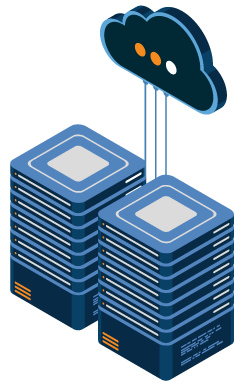
- Restore servers from cloud backups into our own infrastructure
- Spin up replicated systems in our rack environment
- Establish secure site-to-site VPN connectivity
- Enable users to resume work remotely
- Start fresh backup chains for systems running in the DR environment
- Manage the controlled re-hydration back to your primary site once it is operational
This approach ensures:
- Business continuity during disruption
- No exposure during recovery
- A clean, auditable transition back to normal operations
Continuity That Works
With How You Operate
We don’t design theoretical recovery plans. We design continuity around:
- Your applications and dependencies
- Your users and working patterns
- Your security and compliance obligations
- Your tolerance for downtime and disruption
That includes protecting:
- Physical and virtual servers
- Critical business applications
- Microsoft 365 services including Exchange, SharePoint, OneDrive and Teams
Managed Continuity,
Not “Call Us If It Breaks”
Technology doesn’t recover businesses. People do. As your MSP partner, Deane247:
- Monitors backup health continuously
- Tests recovery processes regularly
- Identifies issues before they become incidents
- Coordinates and executes recovery when required
- Communicates clearly throughout the process
When something goes wrong, you are not left trying to interpret dashboards or
vendor documentation. We take responsibility and lead.

Built for Cyber Resilience
and Compliance
Strong backup and continuity practices underpin:
- Cyber resilience strategies
- Cyber Essentials and ISO 27001 controls
- Insurance requirements and renewals
- Board and stakeholder confidence
Because continuity is embedded into our managed services, it becomes part of everyday operations, not a once-a-year exercise.
Why Deane Computer Solutions
Our customers partner with us because:
- We design for failure, not just success
- We’ve managed real recoveries, not just proofs of concept
- We combine infrastructure, cloud and security expertise
- We remain calm, structured and decisive when it matters most
Backup and continuity are not products. They are capabilities that protect your business under pressure.

Next Steps
If you want confidence that your business can continue operating through disruption, the next step is a conversation.
We Can:
- Review your current backup and recovery capability
- Identify gaps that increase downtime or risk
- Assess Microsoft 365 and server protection
- Design a continuity strategy aligned to your operations
Talk to Deane Computer Solutions about building backup and continuity that actually works when it’s needed.
Talk to Deane Computer Solutions
To discuss how we can help you protect your business and keep it moving forward